SURGE Synthesizer 1.7.0 - Win / Mac / Linux [FREE]
Win x86 x64 vst3 - Mac 64-bit AU & VST - Linux 64-bit VST3 | 35 - 74 - 37 MB Surge is a digital synth and makes no bones about it. If you have used it in the past, it will be like welcoming an old friend back into your life. If you are new to Surge, welcome to the party. Come on in, the water is f
资源介绍
Win x86 x64 vst3 - Mac 64-bit AU & VST - Linux 64-bit VST3 | 35 - 74 - 37 MB
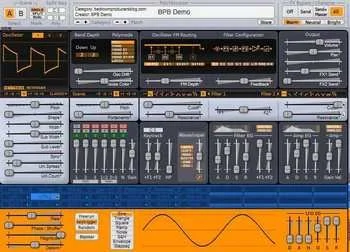
Surge is a digital synth and makes no bones about it.
If you have used it in the past, it will be like welcoming an old friend back into your life. If you are new to Surge, welcome to the party. Come on in, the water is fine.
Surge is back and open source!
Thanks to the generosity of @Kurasu (owner of Vember Audio), Surge has been open sourced and lives on GitHub.
SYNTH SPECIFICATIONS
GENERAL
Synthesis method: Subtractive hybrid
Each patch contain two 'scenes' which are separate instances of the entire synthesis engine (except effects) that can be used for layering or split patches.
Quick category-based patch browser
Runs on a variety of OSes, Plugin Formats, and Architectures
FACTORY SOUNDS
1010 patches
183 wavetables
OSCILLATORS
3 oscillators per voice
8 versatile oscillator algorithms: Classic, Sine, Wavetable, Window, FM2, FM3, S/H Noise and Audio input
The classic oscillator is a morphable pulse/saw/dual saw oscillator with a sub-oscillator and self-sync.
The FM2/FM3 oscillators consists of a carrier and 2 or 3 modulators and various options.
Most algorithms (except FM2, FM3, Sine and Audio-input) offer up to 16-voice unison at the oscillator level.
Oscillator FM/ring modulation
Most oscillator algorithms (except FM2/FM3) are strictly band-limited, yet still cover the entire audible spectrum, delivering a clear punchy yet clean sound.
Noise generator with variable spectrum.
FILTER BLOCK
Two filter units in 8 different configurations
Feedback loop (number of variations inside the parenthesis)
Available filter algorithms: LP12 (3 variations), LP24 (3 variations), LP Ladder (1-4 poles), HP12 (3 variations), HP24 (3 variations), BP (4 variations), Notch (2 variations), Comb (4 variations), S&H
Filters can self-oscillate (with excitation) and respond amazingly fast to cutoff frequency changes.
Waveshaper (5 shapes)
MODULATION
12 LFO units available, 6 are per voice and 6 are global for the whole scene
DAHDSR envelope generators on every LFO-unit
7 deformable LFO waveforms + drawable/step sequencer waveform
LFO 1 allows envelope retriggering when used as step sequencer
Extremely fast and flexible modulation routing. Almost every continuous parameter can be modulated.
EFFECTS
8 effect units arranged as 2 inserts per scene, 2 sends and 2 master effects
10 top-quality algorithms:
Delay, Reverb, Chorus, Phaser, EQ, Distortion, Conditioner (EQ, stereo-image control, and limiter), Rotary speaker, Frequency shifter, Vocoder
Changes in version 1.7.0
1.7.0 is a major release done on July 28, 2020. (Enormous changes ndlr)
Spoiler:
A Skin Engine
Surge now has a dark skin. “Menu/Skins/Surge Dark”.
Surge is now runtime skinnable with swappable assets. Documentation on this skinning engine is forthcoming. For now if you want to author a skin, you are probably best to hop onto our slack.
All synth elements in both skins get “Hover” gestures to make the UI more active
DSP and Synthesis Changes
New and Improved Effects
Reverb 2, a new reverb based on a network of allpass filters and delays
Flanger, a flanger with some extreme tuning and feedback options
Ring Modulator, a simulation of an analog ring modulator with a choice of carrier waves based on Surge’s Sine oscillator
Rotary Speaker model adds drive, separate horn and rotor rate, stereo width, and mix.
Fix a phaser issue which caused instability at high modulation rates
Fix a Reverb1 and 2 problem where the HF/LF damping could become unstable at high modulation values
EQ gets a mix parameter, which can lead to phase errors which are musically engaging
Oscillator Improvements
The Sine oscillator becomes a mini-synth
Many more quadrant waveforms,
Unison mode,
Extended feedback range and negative feedback (results in a square-like waveform rather than saw-like)
Built-in low-pass and high-pass filters
The Sine wavetables are ordered to match the TX-series wavetables for low wavetable count
Built in filters added to Window, S&H and Audio Input Oscillators
You can route the output of Scene A into Scene B and mix it with the plugin audio input
FM2/3 can have negative feedback in new instances.
Other DSP Changes
Unison goes up to 16 on all unison oscillators
Surge uses the Surge Tuning Library used in several of our synths for SCL/KBM support
Fixed a problem with phase overflow in very long running Sine and FM2/3 oscillators
The SIN oscillator and RM use a high performance approximation for sine/cos
Fix a crash with high sync values in absolute mode in the Classic oscillator (SurgeSuperOscillator.cpp)
Fix problems with the ADSR envelope could become unstable or non-silent in very-high or very-low DS regimes
Modulation and Voice Management Changes
Each voice LFO can now trigger filter and amplifier envelopes.
You can ‘deactivate’ the rate of an LFO (right mouse / deactivate on rate slider) which makes the LFO take the constant value at current phase, and makes phase act like a scrub operator.
Step Sequencer UI rewrite
Vector Rendering
Show the actual curve
Show value displays, right-mouse drag to draw a ramp, quantize-to-scale-length drags, and more
Substantial improvements to Portamento
Add Constant Rate and Constant Time modes
Add multiple Portamento rate curves
Add a glissando mode (portamento hits only scale degrees)
Add a mode to retrigger envelopes when crossing scale degrees
Features all available on the Right Mouse button on the Portamento Slider
Cap modulated envelope sustain at 1
Fix a variety of issues with modulation phase which could, in extreme modulation cases, cause glitches and noise
Clear FX Modulation when changing FX type to avoid unexpected modulations
Fix a variety of situations where, in extreme inter-modulation cases (LFO1->2->3->1 and the like) LFO sources could go unstable.
Allow the AEG and FEG to moduate LFO states.
User Presets and Persistence
FX and MIDI Mappings have user presets distinct from the patch/daw stream
MIDI mappings are stored in your DAW state for recall
You can display the current midi mapping from the menu
UI Improvements
Every parameter links to context specific help.
Discrete parameters (like filter type or tempo synced LFO rates) can now also be set through the right mouse button context menu
Continuous parameters and their modulations can now be set with a text input dialog by choosing the value from the slider’s right mouse button context menu
Slider Ctrl-Drag is properly quantized for values and for modulations
Updated units and display of many values and their modulations
LFOs which are in envelope or Step Seq mode will be renamed as ENV or SEQ across the board
Labels, checkmarks, and ordering in menus more generally consistent
Zoom button in the Status panel with more consistent status panel menu behavior
Active hover gestures on buttons, sliders, and so on
Optional High Precision Value Readout mode shows more decimals in popups and value input dialogs
You can browse FX presets with previous/next button, and see the name of the one you have selected
Inactive sliders are transparent (Win/Mac) or have a hidden handle (Lin). Some sliders can be activated with RMB/Activate
OS Specific Improvements
Portable installation support on Windows (Surge will look for SurgeData and SurgeUserData folders next to the .dll/.vst3 first)
Substantial Linux UI improvements
VSTGUI performance patched to substantially improve redraw time
VSTGUI menus patched to open in a non-overlapping fashion
Activate vector UIs for all components (LFO, Oscillator)
Content
New patches from Jacky Ligon, many highlighting new features in 1.7
New patches from Dan Mauer
New patches from Psiome Send
Third party patches better organized and classified.
ARM Support
The synth builds on Linux ARM platforms from source. Following the direction on the README you can build and run the LV2 or the VST3 and run them in both armv71 and aarch64 PI platforms.
Plugin Improvements
The VST3 works reliably on Linux, including Reaper, Carla, Bitwig 3.2 and sample hosts
The VST3 correctly orders multiple MIDI messages in the same sample chunk
Fix a problem where the VST3 mis-rendered Macro DAW automation in Reaper
Add the VST3 context menu to Macro controls
The VST2/3 can output scenes onto auxilliary channels (not yet implemented in AU or LV2)
Fixed a bug with VST3 host menus which would crash Surge in some hosts (especially Bitwig Linux)
AU advertises patch names to Logic Pro
LV2 reads screen scale factors
DAW automation names contain scene label and are uniquely named
VST3 Windows properly names MIDI extra parmeters
VST3 Menus are available on Macro parmaeters also
Fix an error where some hosts in some situations would fail to load vstpreset versions of Surge sessions
Smaller Changes
Set Default Zoom option now sets the default and the current zoom level
Many UI elements renamed to be more consistent across the instrument
Effects now have an init (dry) and an init (send) preset, the latter to be used in send FX slots
Fix a bug which limited modulation on some Scene B modulation sources
SVG renderer supports radial gradients
Menu labels and capitalizations generally more consistent
Limit MIDI learn to sensible controllers
Use General MIDI CC names in macro controller context menus
You can choose the name of MIDI note 60 (default is C4; you can also pick C3 or C5) and it is applied consistently
Developer Mode menu is available on right click of the Menu button
Cursor hiding is a user option on Windows
When reappearing from being hidden, mouse cursor is restored to the position from which the drag was started
Scroll wheel works on LFO Type parameter
The information popup no longer clips or draws offscreen
Popup Prompts have titles and directions
You can set a default author and comment for patches you save
Fix a bug which caused the cursor to disappear on windows when renaming a Macro
Show an error when loading an .fxp file from a synth other than Surge
Properly callibrate windows mouse wheel to work on integer sliders
Fix a bug whereby switching an SLFO to and from a deformed Step Sequencer could mis-callibrate LFO rate
Infrastructure
Moved our entire build system to CMake
Fixed a bug where patches could incorrectly stream in international settings with “,” as a decimal separator
Binaries are now properly licensed FOSS - disabled the VST2 builds
Better versioning strategy in the various DLLs, plugins, and tools
Applied a variety of updates to our deb package
Move our Azure pipelines to macOS 10.14 (but still build for 10.12 and higher)
Tightened up some unit test thresholds to make them more reliable
Removed a large number of code warnings
Increased warnings-as-errors on macOS and squashed several warnings
The NIGHTLY deb installer starts version number with 9. not 0.
Renamed all ‘master’ code branches ‘main’.
Add a more correct copyright statement to each of the code files.